Voice AI · Conversational AI · Automation
AI phone agents for small business: what they cost and how they work
How an AI phone agent answers, understands and acts on a call, what drives the monthly bill, and when a small business should not build one at all.
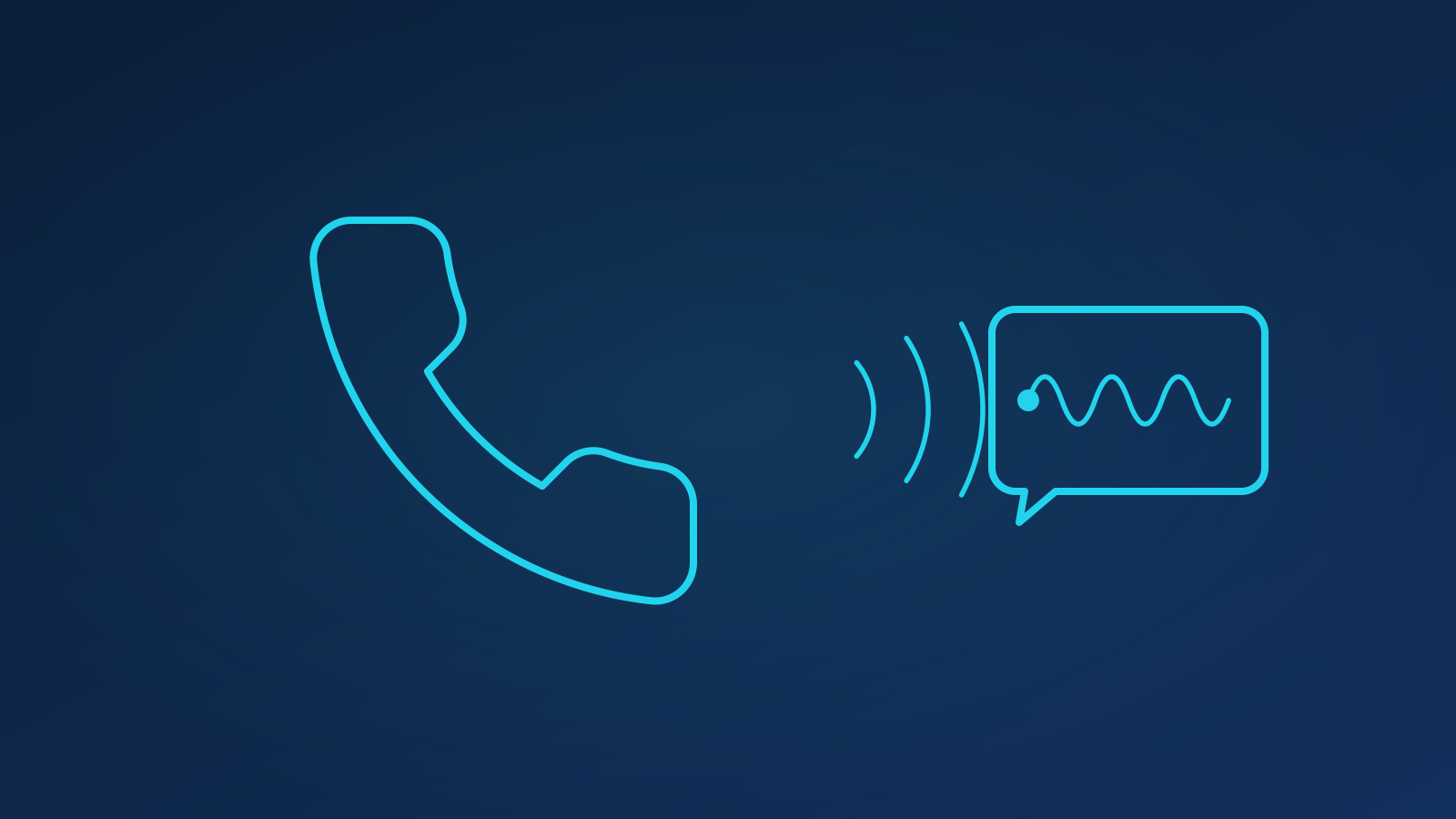
An AI phone agent is software that answers a phone line, understands what the caller says, replies in a natural voice and completes tasks such as booking an appointment or logging a call-back. For a small business it typically costs a modest per-minute fee for telephony and AI processing plus a one-off build and a monthly retainer for upkeep, with the total driven mostly by call volume and how many systems the agent has to talk to.
TL;DR
- A phone agent is a pipeline: telephony carries the audio, speech-to-text transcribes it, a language model decides what to say and do, and text-to-speech speaks the reply.
- The hard engineering is in the seams: latency, interruptions (barge-in), tool calls to your booking or CRM system, and a clean hand-off to a human.
- Costs stack per minute (telephony, STT, TTS, LLM tokens) on top of a build fee and a retainer; volume is the biggest lever.
- It pays off when you miss calls you would otherwise convert; it does not pay off for low-volume, high-stakes or highly emotional conversations.
How does an AI phone agent actually work?
Every production voice agent we have shipped follows the same call flow, whatever the vendor stack:
- Telephony. A number is provisioned with a programmable-voice provider. When a call arrives, the audio is streamed to your application in real time.
- Speech-to-text (STT). A streaming recogniser converts audio into words as the caller speaks, emitting partial transcripts and a final transcript when it detects a pause.
- Dialogue and reasoning. A language model receives the transcript, the conversation so far and a system prompt describing the business, its rules and its tools. It decides whether to answer, ask a clarifying question or call a tool.
- Tools. The model can look up availability, create a booking, check an order or write a CRM note. Each tool is a small, well-typed function; the model never touches your database directly.
- Text-to-speech (TTS). The reply is synthesised, ideally streamed sentence by sentence so the caller hears the first words within a second.
That loop repeats until the caller hangs up, the task is done, or the agent decides a person is needed. The design work is in making each step fast enough that the whole thing feels like one conversation. Our voice AI practice spends most of its time on exactly that.
What makes a phone agent feel natural or robotic?
Three details separate a demo from something customers will tolerate.
- Latency. Callers expect a reply within roughly a second. That budget has to cover STT finalisation, model inference and the first TTS chunk. Streaming at every stage, using a smaller model for routine turns and caching common responses all help.
- Barge-in. People interrupt. The agent must detect speech while it is talking, stop playback immediately and treat the interruption as the new input. Without it, callers end up shouting over a monologue.
- Hand-off to a human. The agent should recognise frustration, repeated misunderstanding, requests for a person or topics outside its remit, then transfer the call with a short summary for the receiving colleague. If nobody is available, it takes a structured message and confirms what happens next.
Get these right and a plainly artificial agent is still welcome; get them wrong and the best voice in the world will not save it.
What tasks are phone agents good at?
The strongest small-business use cases share three properties: high volume, repetitive structure and a clear system of record behind them.
- After-hours and overflow answering with message-taking
- Appointment booking, rescheduling and reminders for clinics, salons and trades
- Order status, opening hours and directions
- Lead qualification with a hand-off to sales during business hours
- Simple outbound calls such as confirmations and no-show reduction
Each of these is a conversational front-end on an existing process, which is why integration with calendars, CRMs and ticketing tools is usually a larger share of the project than the voice layer. Our AI automation team typically builds those connectors first, then wires the voice agent on top.
How much does an AI phone agent cost?
Costs come in two layers: what you pay per minute of conversation, and what you pay to build and maintain the system.
| Cost driver | What it covers | Typical shape |
|---|---|---|
| Telephony | Number rental, inbound and outbound minutes | Small fixed fee plus per-minute rate |
| Speech-to-text | Streaming transcription of the caller | Per audio minute |
| Text-to-speech | Synthesised voice for the agent | Per character or per audio minute |
| Language model | Tokens for prompt, transcript and tool calls | Per token, scales with call length and prompt size |
| Build | Prompt design, tool integration, testing, compliance | One-off project fee |
| Retainer | Monitoring, prompt updates, model changes, reporting | Monthly |
As an example, a business handling a few hundred short calls a month might see the usage layer land in the tens of dollars, whereas several thousand calls a month with longer conversations moves it into the hundreds. The build fee depends almost entirely on how many systems the agent must integrate with and how strict the compliance requirements are; a single-calendar booking agent is a very different project from one that touches patient records. Treat every figure here as illustrative and ask any vendor for a per-minute breakdown rather than a bundled price. The useful comparison is not against zero but against the status quo: missed calls, an answering service, or a staff member pulled from other work.
When should a small business not build one?
We say no to voice projects more often than people expect. Walk away, or wait, when:
- Volume is low. Under a few hundred calls a month, a good voicemail-to-text workflow and a fast call-back promise often beat the total cost of a phone agent.
- Errors are expensive or emotional. Complaints, bereavement, medical triage and anything with legal weight should reach a person quickly. An agent can route these calls; it should not resolve them.
- The underlying process is messy. If bookings live in three places and nobody agrees on the rules, automating the phone line automates the confusion.
- You cannot commit to reviewing transcripts. The first weeks after launch are where the real tuning happens.
A week spent listening to real calls will usually tell you which side of the line you are on. Our AI consulting engagements often start there.
Key takeaways
- A phone agent is telephony, streaming STT, an LLM with tools and streaming TTS, glued together with attention to latency and interruptions.
- The integrations with your calendar, CRM or ticketing system are usually the bulk of the build.
- Per-minute usage costs are modest at small-business volumes; the build and retainer depend on integration depth and compliance.
- Hand-off to a human is a design requirement, not a fallback.
- The best use cases are high-volume, repetitive and backed by a clear system of record; the worst are low-volume, high-stakes or emotionally charged.
If you would like a frank read on whether a phone agent suits your business, get in touch and we will start with your call logs, not a demo.
FAQ
How long does it take to launch an AI phone agent?
For a single, well-defined task such as booking appointments into one calendar, a working pilot can be live within a few weeks, including prompt design, integration and testing on real calls. Projects involving several systems, outbound campaigns or regulated data take longer, mainly because of integration and sign-off. Plan for a supervised soft launch before routing all traffic to the agent.
Will callers know they are speaking to an AI?
They should. We recommend a brief, honest greeting that states the assistant is automated and offers a person on request. In several jurisdictions disclosure and consent for recording are legal requirements, not just good manners. Callers are far more forgiving of an agent that is upfront and quick to transfer than one that pretends to be human and stumbles.
Can a phone agent work with our existing phone system?
Usually, yes. Most business phone systems can forward unanswered or after-hours calls to a new number, and cloud PBX platforms support SIP trunking into a programmable-voice provider. The agent can transfer calls back to your existing extensions. The main questions are whether your booking or CRM software exposes an API and who owns the phone number, both of which we check early in scoping.

Written by
William Ali · Founder & AI Specialist
Leads strategy and solution design. Has shipped conversational AI, agent and analytics systems for clients across e-commerce, SaaS, healthcare and finance since founding AIYatch in 2019.
About the team →Related services
Ready to chart your AI course?
A free 30-minute consultation: we listen, ask hard questions and tell you honestly where AI will and won't help.